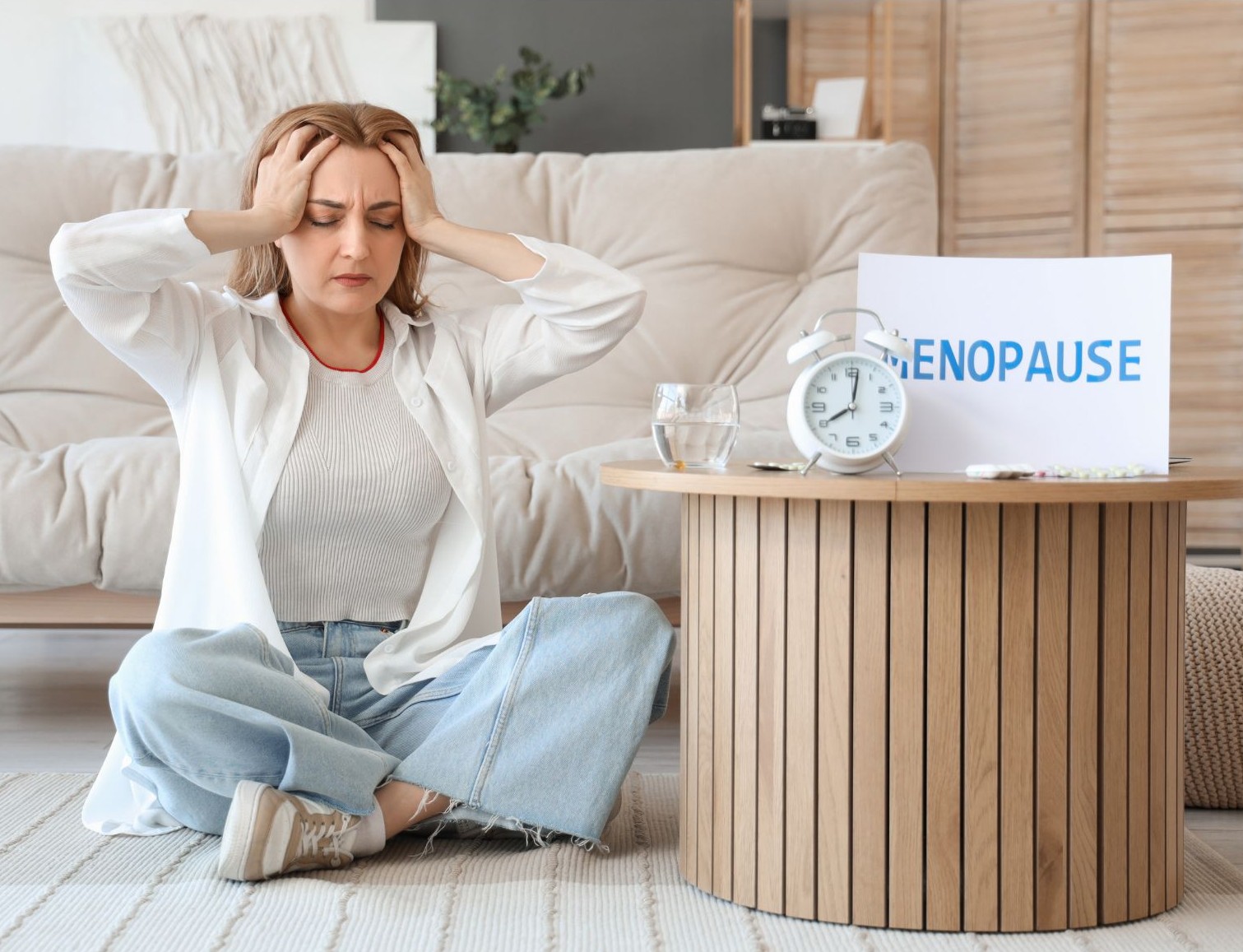
Why does menopause seem to affect everything?
Why does menopause seem to affect everything?
Have you ever found yourself thinking...
“Why does menopause seem to be affecting EVERYTHING?”
One minute you're dealing with hot flushes. Then your sleep starts to suffer. You can't seem to concentrate. You're more tired than usual. Your mood is all over the place. Your joints are aching. You don't feel quite like yourself.
And you might find yourself wondering:
“Is all of this really connected to menopause?”
The short answer is - yes, it can be.
Menopause is much more than a change to your periods. The hormonal changes that happen during perimenopause and beyond can have an impact on many different parts of your body and how you feel, which is why it can sometimes seem as though everything is changing at once.
So what's actually going on?
During perimenopause, your hormone levels - particularly oestrogen and progesterone - begin to fluctuate and eventually decline.
These hormones don't just affect your reproductive system. They interact with many different systems throughout your body, including your brain, nervous system, bones, muscles, cardiovascular system and metabolism.
So when those hormone levels change, it's not surprising that you might notice changes in lots of different areas too.
🧠Your brain
Brain fog is one of those symptoms that can be incredibly frustrating.
You might struggle to find the right word, lose your train of thought, forget why you've walked into a room or find that tasks that used to feel easy suddenly take much more concentration and it can be hard to focus. Maybe you find it hard to make decisions (decision making fatigue), where before you could decide just like that!
Thanks to amazing research, in particular, that of Dr Lisa Mosconi, we now know that Menopause Brain is a very real thing! Our brains undergo an "upgrade" during perimenopause as it adapts to fluctuating oestrogen levels. These hormonal changes affect the way your brain functions, leading to symptoms like brain fog, lack of focus and concentration, decision making fatigue, anxiety or depression among others.
😴Your sleep
Perhaps you're struggling to fall asleep. Or you're waking at 3am and your brain suddenly decides it's time to think about everything you've ever done, suddenly chronic overthinking, anxiety and stress.
Night sweats, hot flushes and changes in temperature regulation can obviously disrupt sleep too - these symptoms are caused by falling levels of oestrogen affecting the hypothalamus (our body's thermostat and temperature regulator).
And when you're not sleeping well, everything else can feel harder.
🌡️Your temperature regulation
Hot flushes and night sweats are probably some of the symptoms we most commonly associate with menopause.
They happen because falling oestrogen levels affect the hypothalamus, the part of your brain that regulates body temperature.
Perhaps you're at work, giving a presentation when a hot flush strikes, or at home watching the tv and need the windows open while it's actually snowing outside and everyone else is freezing!
It can be really disconcerting...
⚡Your energy
When you're not sleeping well, you're dealing with hormonal changes and your nervous system is under more strain, it's understandable that your energy can take a hit.
You may feel exhausted even after what should have been a restful night.
That can then affect your motivation, concentration, mood and ability to do the things you normally enjoy.
🦴Your muscles and joints
Aches, stiffness and changes in muscle strength can also become more noticeable during midlife.
Oestrogen plays a role in maintaining bone and muscle health - we have ostrogen receptors all over our body, in our muscles, bones, joint, gut and arteries for example. As oestrogen levels fall during perimenopause we can get symptoms like achy joints and muscles. Frozen shoulder is a really common symptom of perimenopause!
🥗Your metabolism and body composition
You might notice that your body seems to respond differently to food and exercise than it used to.
Perhaps your weight is changing, particularly around your middle, or the things that worked for you in your 30s no longer seem to have the same effect.
Our muscles have oestrogen receptors and as oestrogen starts to decline, so does our muscle mass. Muscle starts to disappear and magically turns into fat, particularly noticeable around the belly area!
Again, hormonal changes are part of a much bigger picture that includes age, muscle mass, activity levels, sleep, stress and nutrition.
🩵 Your emotional wellbeing
And then there's the emotional side of menopause.
You might feel more anxious, overwhelmed, irritable or emotional. Your confidence may take a knock. You might find that things that you previously coped with quite easily suddenly feel like too much.
That doesn't mean you're weak.
It doesn't mean you're “just stressed”.
And it certainly doesn't mean you're imagining it.
Your body is going through a significant period of change.
It's all connected
Perhaps the most important thing to understand is that these symptoms don't necessarily exist in isolation.
Poor sleep can leave you exhausted.
Feeling exhausted can affect your mood and concentration.
Brain fog can knock your confidence.
Feeling anxious or overwhelmed can make it harder to sleep.
Less energy can mean less movement.
And all of this can leave you wondering where the woman you used to be has gone.
But you haven't disappeared.
You're navigating change.
And understanding what's happening can be the first step towards feeling more in control.
You don't have to just put up with it
There is no single magic solution to menopause - and everyone's experience is different.
But there are lots of things that can support you through this stage of life.
Nutrition, movement, strength, sleep, morning and evening routines, stress management, connection and emotional wellbeing can all play a part. And for some women, medical support such as HRT may also be appropriate.
It's about understanding what your body needs now and finding the things that work for you.
And that's where menopause wellness comes in.
You don't have to navigate all of this alone.
Sometimes, having someone help you step back, look at the bigger picture and understand how all the different pieces fit together can make a huge difference.
Because menopause might affect many parts of you - but that doesn't mean you have to let it take over all of you. 🌺
If you're feeling overwhelmed by your symptoms and don't know where to start, I'd love to help you find a place to begin.